

The shift from chatbots to agents is now real
Something important changed in 2026: AI stopped being just a chat interface and started becoming an execution layer. In May, Google said Search was entering the era of Search agents, added a new AI-powered Search box, and reported that AI Mode had already passed one billion monthly users. Around the same time, Microsoft Build 2026 filled its keynote and developer updates with agent-first announcements around memory, governance, observability, and collaborative workflows.
The message from the biggest platforms in tech is now clear: the future of AI is not just answering questions. It is helping people complete real work.

Why this wave feels different
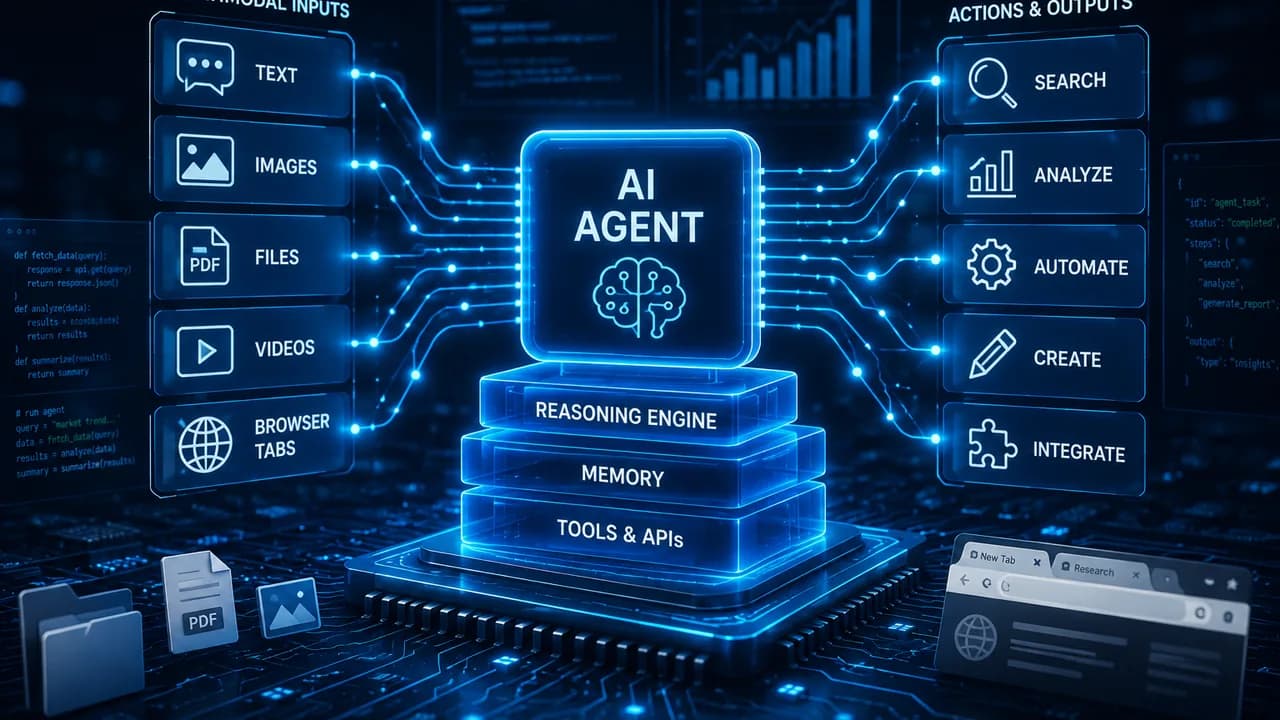
What changed is not one single model release but the stack around the model. Today’s leading systems can work across text, images, files, tabs, and tools instead of staying trapped inside one prompt box.
- Google’s redesigned Search experience now supports inputs like text, images, files, videos, and even Chrome tabs.
- OpenAI’s updated Agents SDK focuses on files, commands, code editing, and controlled sandboxes.
- Anthropic says newer agentic systems can reason directly over PDFs, diagrams, and other unstructured content.
This is why the conversation has moved from “Can AI write?” to “Can AI understand context and do the next step?”
Businesses are paying attention for a reason
Business interest is moving fast, even if the market is still early.
- McKinsey found that 88% of organizations now use AI in at least one business function, while 23% say they are already scaling an agentic AI system somewhere in the enterprise and another 39% are experimenting.
- Deloitte data cited by the World Economic Forum says 74% of companies plan to deploy agentic AI within two years.
- Among developers already using agents, Stack Overflow found that 69% say agents increased productivity and roughly 70% say they reduced time spent on specific tasks.
That is why agents are getting so much attention: leaders are no longer looking for another chatbot. They are looking for workflow leverage.

The hype is real, but so are the limits
The reason this topic works so well right now is that it has both momentum and tension. The same Stack Overflow survey that shows strong AI adoption also shows that most developers still do not use AI agents, 46% distrust the accuracy of AI tools, and 66% are frustrated by results that are almost right but still need cleanup. McKinsey says most organizations are still in pilot phases, and the World Economic Forum notes that only 21% of leaders surveyed have a mature governance model for autonomous agents.
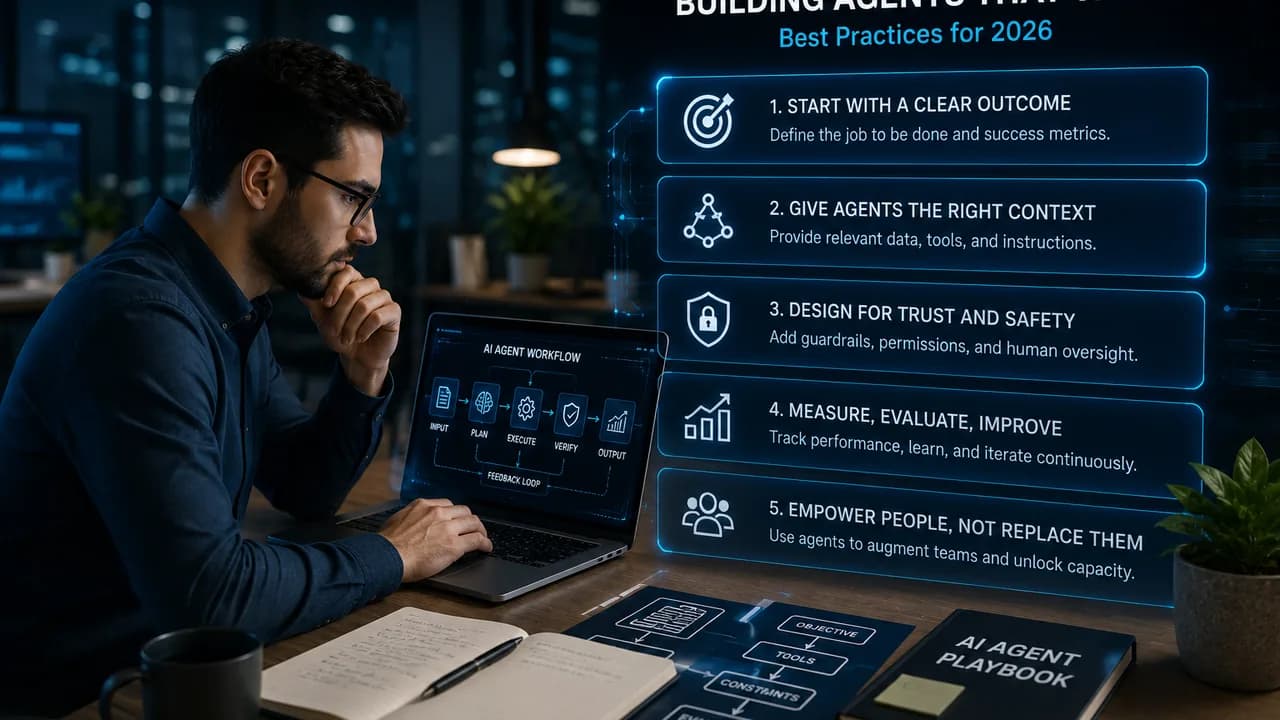
So the next winners in AI will not be the teams that deploy the most demos. They will be the teams that combine automation with human review, permissions, guardrails, and redesigned workflows.
Where agents are most likely to create value first
The most useful near-term agent use cases are not flashy science fiction ideas. They are practical, repeated, expensive tasks that sit between people, systems, and decisions.
- McKinsey says agent use is most often reported in IT and knowledge management, including service-desk management and deep research.
- Google Cloud’s 2026 material points to customer service, code quality, and threat detection as practical examples.
- OpenAI’s own workspace-agent examples include weekly metrics reports, lead qualification, software review, and third-party risk management.
That pattern matters. The companies that move first will usually win not by replacing people, but by reducing coordination drag and giving teams more time for higher-value work.
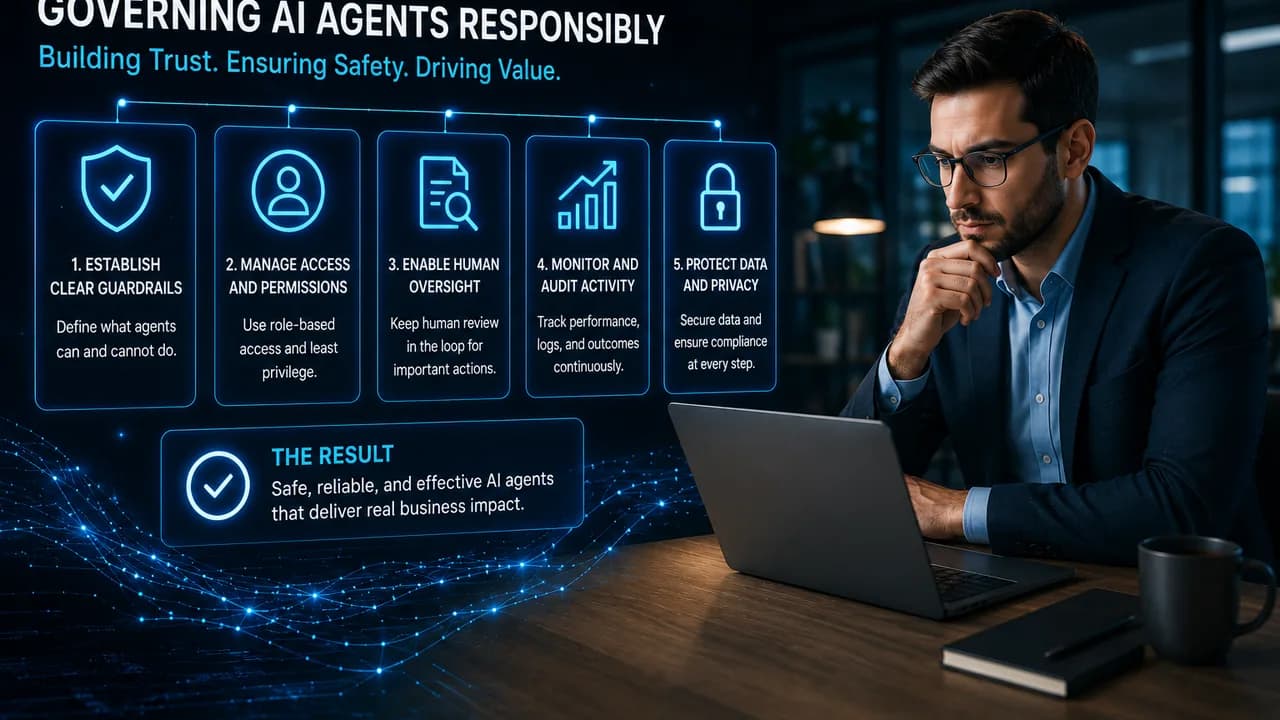
AI agents are not the end of human work. They are the next step in how work gets organized, supported, and accelerated. The real opportunity in 2026 is not to replace teams with automation, but to build smarter workflows where people stay in control while AI handles the repetitive, connected, and time-consuming parts of the process. Companies that understand this balance early will be better prepared for the next era of digital work.

Written by
Trustive Tech Editorial Team
Part of the Trustive Tech team — building modern digital products for ambitious businesses across the Middle East and beyond.
Subscribe to our newsletter
Get our latest articles on web & mobile development, design, and digital strategy — straight to your inbox.